
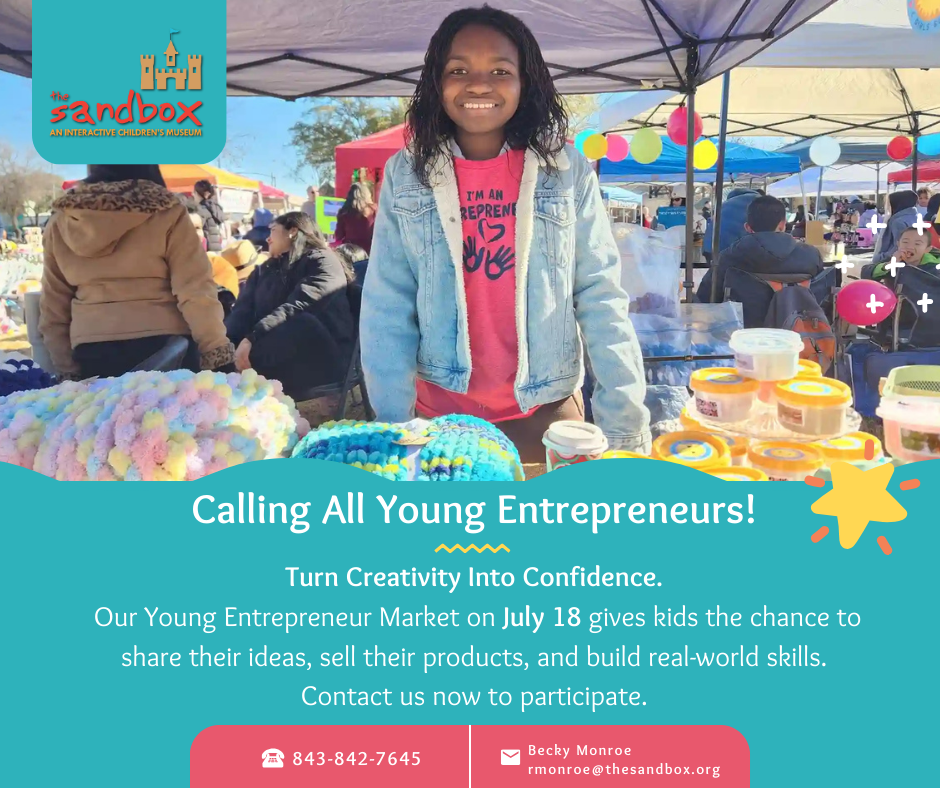
What If Your Child Could Be a Young Entrepreneur?
Most kids already have the spark of entrepreneurship—you just see it in different forms. The backyard lemonade stand. The bracelet-making phase that takes over the kitchen table. The LEGO inventions. The drawings taped proudly to the fridge with a “for sale” sign scribbled underneath.
The question isn’t whether children can be entrepreneurs. It’s whether we give them the space to try.
Early entrepreneurship experiences are powerful because they do something school alone often can’t: they turn ideas into action. Kids learn that their creativity has value beyond play. They practice confidence in real time—talking to customers, explaining their ideas, handling money, solving small problems, and adapting when things don’t go exactly as planned.
These are not just “business skills.” They are life skills: confidence, communication, resilience, and independence.
And perhaps most importantly, they begin to see possibilities for themselves.
A First Step Into Real-World Creativity
On July 18th, we are hosting a Young Entrepreneurs Market, where kids will have the opportunity to step into the role of creator, maker, and seller.
This is not about perfection or polished businesses. It’s about participation, imagination, and ownership.
Young entrepreneurs can sell:
- Lemonade or simple food creations
- Friendship bracelets and handmade crafts
- Artwork or original designs
- 3D printed creations
- Anything they dream up and build themselves
We want kids to bring their ideas, not just a template of what a business “should” look like.
How Parents Can Make This Real (Starting Now)
If you’re wondering, “My child might love this—but where do we even begin?”—here are simple, doable steps:
1. Start with a conversation
Ask: “If you had a tiny business, what would you sell?” Don’t guide too quickly—let the ideas come first, even the wild ones.
2. Pick one idea and make it simple
Encourage something small and achievable. A few bracelets. One drawing style. A single product idea is enough.
3. Practice the “story” behind it
Have your child explain what they made and why. This builds confidence more than the product itself.
4. Let them help create the setup
Even choosing a tablecloth, a sign, or a name for their “business” helps them take ownership.
5. Expect learning, not perfection
This is about trying, not getting it right. Some kids will sell out. Some won’t. All of them will gain something valuable.
We will provide families with a simple checklist so nothing feels overwhelming—from what to bring, to how to prepare, to how to help your child feel ready for their day at the market.
Join Us
If your child is curious, creative, or just ready to try something new, we’d love for them to be part of this experience.
To register or learn more, contact us at:
843-842-7645 | rmonroe@thesandbox.org
Sometimes the biggest impact comes from the smallest beginning—a table, an idea, and a child realizing, “I made this, and people want it.”